


You cannot build a humane, serendipitous city with teams who are transactional, risk-averse and don’t really know themselves.
This episode is the sort of argument that can be tough to have with very logical, rational and ‘serious’ types that you will find in the realm of engineering, economics and urbanism.
It is also not my typical domain. But it is something I have been converted to embrace. Even better, the two people involved are not found in the traditional urbanism circles.
Florence Okin and Sam Cohen run a workshop called Know Thyself as part of their business, The Twenty Six Collective. Flo spent fifteen-odd years on the talent side of venture-backed startups and qualified as a coach along the way, mostly because she was always the person friends came to when things fell apart. Sam did the other half of that world … a couple of COO roles, the full entrepreneurial tour, “got the t-shirt” … then went off and apprenticed himself to a pair of Dutch master coaches to learn how to properly hold a person without flinching. They met when Flo interviewed Sam for a job, though, Sam maintains it was a coffee, only Flo points out he turned up with a CV.
In many ways, this is a lovely companion episode to the one we did with Matt Ballantine … the serendipity, the loose fit, the stuff you can’t design in on purpose. Not the city as a machine for lucky encounters, but the people making the city, and whether they’re even the kind of people who could build such a thing. There is a gap between the psychological version of the worlds we’re building by accident, and the psychology of what people actually want. We pour hundreds of billions into the likes of public transport or regeneration proiects designed by brilliant people who’ve been trained, over long careers, out of curiosity and vulnerability and any comfort with a thing they can’t yet measure … and then act faintly surprised when what arrives is efficient and cold.
Cold teams build cold places.
Sam and Flo might not put in those terms, mind … they didn’t come at any of this with the mindset of cities. But their experiences from startup culture are very relevant, because, well, people.
They came at it through a survey … anonymous, deliberately nosy, fired out across their networks before they built anything. A few hundred replies came back, and the pattern in them is the reason the business exists. People reported very high success and markedly lower fulfilment. One line Flo still quotes:
“I’m earning seven figures. I’ve hit every marker I could possibly have wanted. And I’m not happy. I’m miserable.”
Dark. And I suspect not very unusual.
When they asked people to name the course that might sort them out, roughly one in five, unprompted, described the same thing … they wanted to understand themselves. Which is a strange gap in the market, and Sam has a clean read on why nobody’s filled it:
“No one’s cracked it. We’re all imperfect, we’re all juggling stuff, and even with all these external markers of success, the inner world is so often just left underdeveloped.”
That’s the bit I’d like the citymaking professions to sit with, because it isn’t a wellness point. The people commissioning and designing our biggest public things are drawn straight from that pool … externally successful, internally under-examined … and we hand them ten-billion-dollar decisions about how millions of people will feel moving through a place, having never once asked whether they know how they feel moving through anything.
The workshop itself is a brilliant double act … Flo, I hope won’t mind me calling her motherly, makes the room safe; Sam more direct, happy to challenge and be the one that breaks a seemingly awkward silence … and it’s disarmingly good at getting reticent people talking. Flo has a story about a hostile corporate session and one bloke who declared the whole thing had “gone from bad to appalling,” then spoke more than anyone and called it his best day in years.
Even though I arrived at this having half-organised the session myself, must admit to being a bit skeptical. Early on I nipped out to let a latecomer in and came back to a room that had changed temperature in the space of ten minutes as an exercise progressed. Previously near-strangers had gone from small talk intros to rich conversations sometimes about the things don’t mention at work. An important detail here is also who was participating … this wasn’t fluffy wellness people, but a bias towards some fairly nerdy transport, infrastructure and urbanist types. They took to it completely, and one’s now working it into an accelerator programme he runs. The people most conditioned out of this were the quickest to want it back.
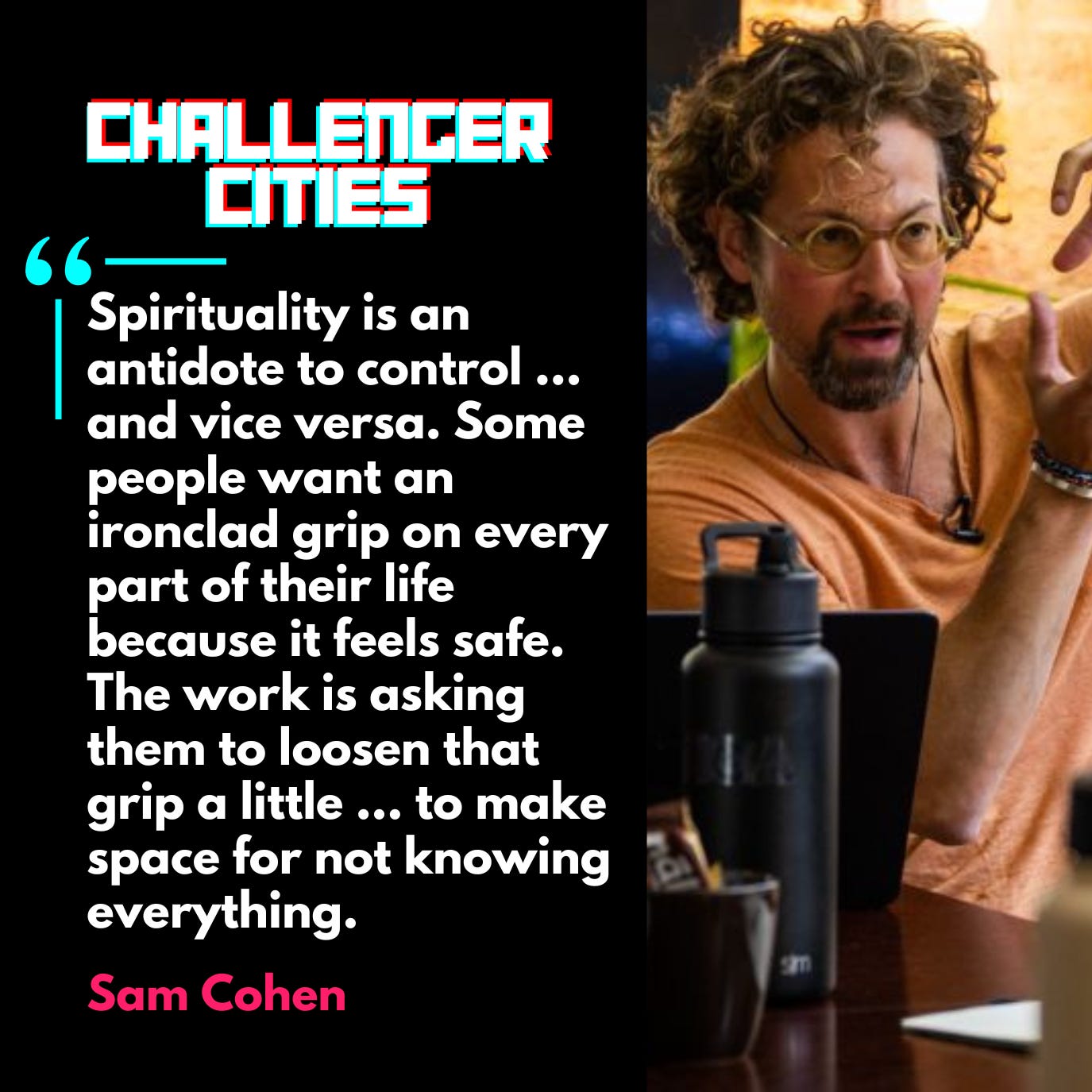
Which rather begs the question of what they’re doing to people to get there. And here I have to talk about the woo. Say “spirituality” in a professional meeting and you’ll get looked at like you’re a bit doolally. But we need to remember we are designing things for people that will have some unconventional and somewhat irrational beliefs. It’s part of being human. The useful core to this has nothing to do with incense though. Sam frames it rather nicely.
“Spirituality is an antidote to control … and vice versa. Some people want an ironclad grip on every part of their life because it feels safe. The work is asking them to loosen that grip a little … to make space for not knowing everything.”
Read that as an infrastructure professional and it stops being fluffy. We’ve built a whole profession on control … the business case, the risk register, the quantified everything … and the one thing nobody’s trained to do is hold value they can’t yet measure. Which, in language a planner respects, is a spiritual skill. It’s the same seam I keep working from the outside in Cities Without a Proposition … that we run cities on pure supply-side logic, building and zoning without asking who it’s for or why anyone would choose it … only Flo and Sam are working it from inside the human being. It’s why I keep banging on about the infrapreneur, the person sitting between the economists clearing the business case and the engineers chasing the speed, asking the question neither discipline owns … who is this for, and why will they love it. You can’t be that person if you don’t know yourself, because the whole job is holding an ambiguity the spreadsheet is desperate to resolve.

That is probably modest version of the argument. The most ambitious thing Sam said as companies assemble perfectly sensible boards, he points out … the chair who’s done it before, the finance brain who sees the realm through their economic model, the marketer that needs to feel like they can justify their actions … but:
“We’re heading into a time so messy and complex that you actually want a spiritual board of directors too. Someone with a firm hand on the moral tiller. Capitalism’s got so top-heavy and economic that it’s thrown off all these externalities. There just needs to be more balance in the room.”
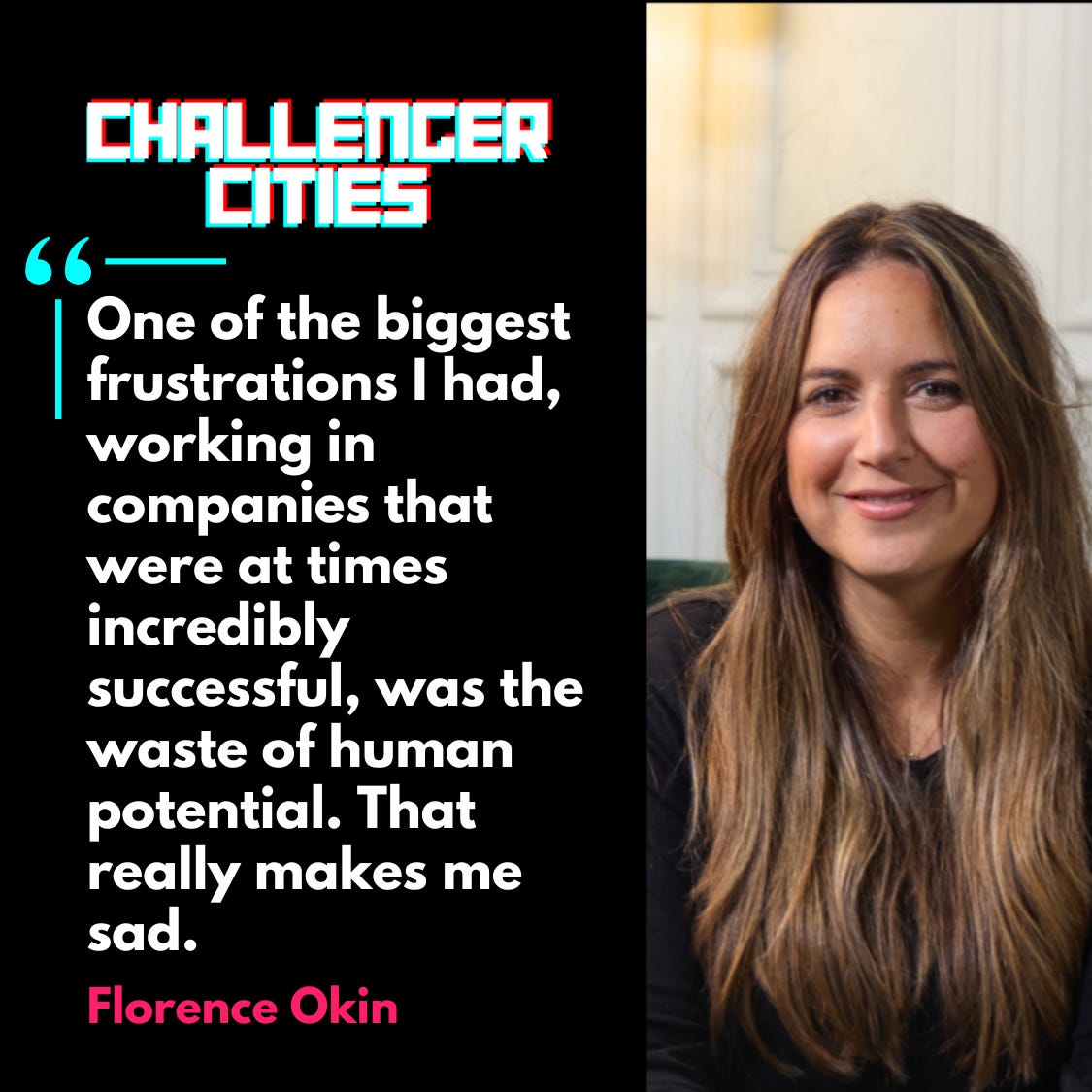
Hold that against the room hosting any megaproject you like. Economists, engineers, increasingly the right consultees … and conspicuously nobody whose whole job is the human proposition, the reason the thing will be loved rather than merely used. Flo comes at the same wound from the talent side, and it’s the part that visibly bothers her … the waste of human potential she watched inside successful companies, brilliant people ground down into something far smaller than what they’ve got. And under all of it sits the short-termism that keeps it spinning … a large majority of managers, asked whether they’d back something that pays off in three or four years but dents this quarter, will kill the bigger future. Not so much out of stupidity, but conditioning by a system everyone privately admits doesn’t work. The way out isn’t another framework. It starts with one person, confident enough in themselves, to defend a decision the spreadsheet can’t yet justify … which, traced right back, is exactly what knowing yourself buys you.
It’s the same drum a lot of my guests end up beating from different angles. Richard Fisher called it monodisciplinary confidence … everyone doing their own job impeccably while the passenger gets a station identical to the one they left. Flo and Sam are working one layer beneath that. Before you can build the environment that gets the best out of people, the people have to have met themselves.
The double act episodes we’ve done lately set up the biggest possible future we can imagine, and the smallest possible thing we can start doing right now. Flo takes on the biggest:
“Ultimately it’s about helping people raise their consciousness … getting them to look inwards. So many of us are brought up to outsource it … go and see someone for this, someone for that … when a big part of it is being able to tap into what already lives inside.”
If we translate that into citymaking, it’s a lovely takeaway from the episode, of a built environment made by people who’ve done the inner work, so the question of who a place is for is in the room on day one rather than retrofitted at the end as a marketing and comms challenge.
Meanwhile, the smallest action comes from Sam, and it’s a habit most of us don’t notice we have … the little bargains that keep life on hold:
“Stop making if-then statements. Everyone’s got life on hold until it’s perfect, and perfect never turns up. Kill the if-thens, step forward, be a bit brave. Anyone can do that, any time.”
An if-then is one of those private deals we strike to defer the good stuff … when I get the promotion, then I’ll feel secure; once the project ships, then I’ll actually enjoy the work; when things settle down, then I’ll start the thing I care about … and the trouble is the ‘then’ never arrives, because the ‘if’ just keeps moving. So kill one if-then this week.
You can set up a Know Thyself session with Flo and Sam at The Twenty Six Collective. Yes, I’m plugging it, because the whole argument here is that the inner life of the people building the city is upstream of everything we obsess over downstream … and these two are damn good at getting to it. The bloke who walked in saying “bad to appalling” walked out having had the best day in the room. As testimonials go, I’d take that bet for your team.
If any of this sounds like you, talk to them … and me.
To being Challengers.


